
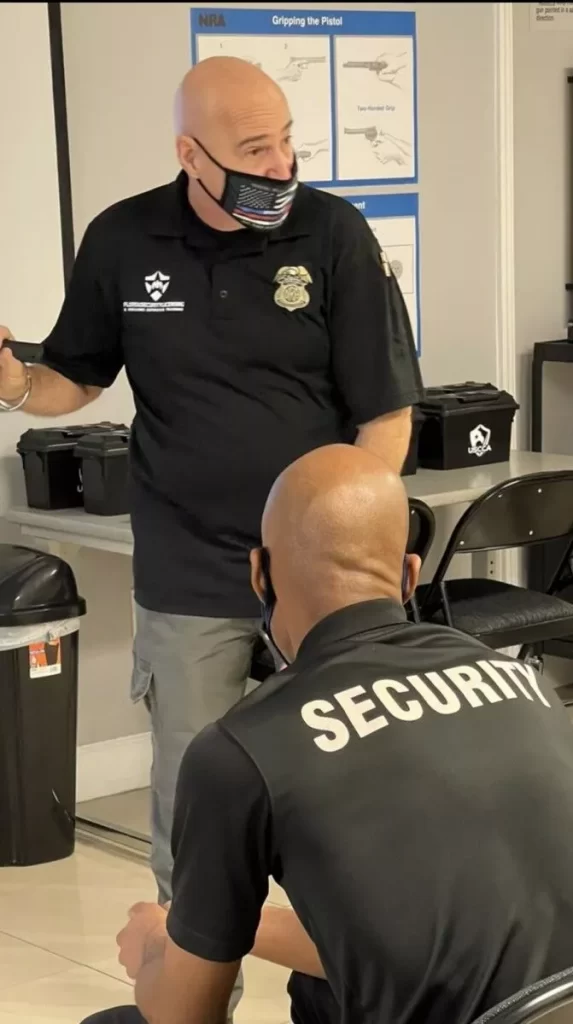
By Carlos Fojo — Instructor, Trainer, and Owner of Florida Security License & Defensive Training
Starting a career as a security officer in Florida can be exciting, but it also comes with challenges that many new officers don’t expect. After training thousands of students across the state, I’ve seen the same mistakes repeated over and over — mistakes that can hold officers back, damage their reputation, or even put them at risk.
The good news is that every one of these mistakes can be avoided with the right mindset and preparation. Here are the most common pitfalls new officers face, and how to avoid them.
1. Treating Training Like a Formality
Many new officers walk into training thinking it’s just something they need to “get through.” They sit quietly, avoid participating, and assume they’ll learn everything on the job.
This mindset is a major mistake.
Training is where you build the foundation for your entire career. When you fail to engage, you miss critical information that could help you handle real‑world situations safely and professionally.
Successful officers treat training as an opportunity, not an obligation.
2. Showing Up Late or Unprepared
It sounds simple, but it’s one of the biggest issues I see.
Arriving late, forgetting required documents, or showing up without proper attire sends a clear message:
“I’m not taking this seriously.”
Supervisors notice this immediately. In security, reliability is everything. If you can’t be counted on to show up on time, you won’t be trusted with better posts or more hours.
3. Believing Physical Strength Is More Important Than Skill
A lot of new officers think being big, muscular, or intimidating is what makes someone effective. That belief leads to poor communication, unnecessary conflict, and bad decision‑making.
In reality, the most effective officers rely on:
- Observation
- Communication
- De‑escalation
- Professional presence
- Accurate reporting
Your brain will always be more valuable than your biceps.
4. Doing the Bare Minimum
Some officers think their job ends with the tasks assigned to them. They don’t look for ways to help, they don’t take initiative, and they avoid anything that isn’t required.
This is one of the fastest ways to stall your career.
Supervisors quickly learn who they can trust — and who they can’t. Officers who only do the bare minimum rarely move up, and they often lose opportunities to those who consistently go above and beyond.
5. Poor Communication and Lack of Professionalism
Security officers interact with the public, clients, supervisors, and law enforcement. Yet many new officers underestimate how important communication is.
Common mistakes include:
- Speaking too casually
- Failing to listen
- Getting defensive
- Not explaining situations clearly
- Writing vague or incomplete reports
Your communication reflects your professionalism. It determines how people perceive you long before they see your skills.
6. Neglecting Appearance and Uniform Standards
This is one of the most overlooked mistakes — and one of the most damaging.
Your uniform, grooming, and posture speak for you before you ever say a word. When an officer looks sloppy, it sends a message that they don’t care about the job.
In security, your appearance is part of your credibility.
Dress sharp. Look sharp. Carry yourself with pride.
7. Failing to Understand the “Why” Behind Procedures
New officers often follow instructions without understanding the purpose behind them. This becomes a problem when they face unexpected situations and don’t know how to adapt.
When you understand why procedures exist, you can make better decisions, respond more effectively, and avoid costly mistakes.
8. Not Asking Questions
Some officers stay quiet because they don’t want to look inexperienced. Ironically, this makes them stay inexperienced.
Asking questions shows initiative. It shows you care about doing the job right. The officers who ask questions during training are the ones who grow the fastest.
Final Thoughts
Every new security officer makes mistakes — that’s part of learning. What matters is how quickly you recognize those mistakes and correct them.
If you avoid these common pitfalls and commit to professionalism, communication, discipline, and continuous improvement, you won’t just survive in this field — you’ll stand out.
And in the security industry, standing out for the right reasons is what opens doors.